News
What Does Making Tax Digital Mean for CIS Subcontractors?

The Short Version
If you're a CIS subcontractor earning over £50,000 gross, Making Tax Digital for Income Tax kicks in from April 2026. You'll need to send HMRC quarterly updates of your income and expenses through compatible software.
The CIS scheme itself isn't changing. Your contractor still deducts 20% (or 30% if unregistered). What's changing is how you report your earnings to HMRC.
What's Actually Changing?
Right now, you file one Self Assessment tax return per year. You tot up your gross income, deduct expenses, offset your CIS deductions, and settle up with HMRC.
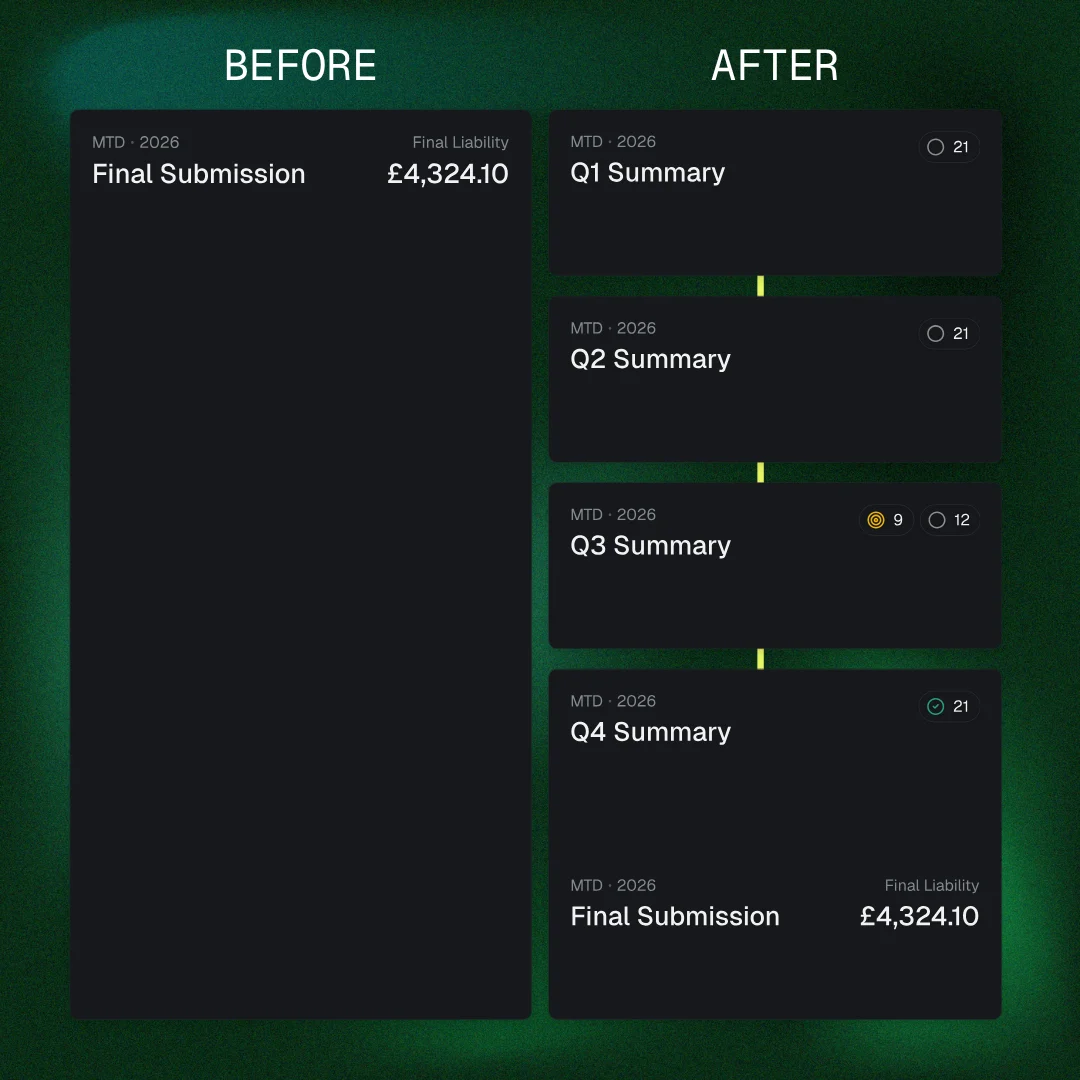
From April 2026, that becomes:
- Four quarterly updates sent through MTD-compatible software
- One final declaration at year end (still due 31 January)
- Digital records of all income, expenses, and CIS deductions kept in software
The quarterly deadlines are 7 August, 7 November, 7 February, and 7 May.
Wait - Is CIS Changing Too?
No. CIS stays exactly the same. Your contractor still:
- Deducts 20% from your pay (or 30% if you're not registered for CIS)
- Reports those deductions to HMRC
- Gives you a payment and deduction statement
Those deductions still count as tax already paid when your final liability is calculated. Nothing different there.
What's new is that instead of reporting everything once at the end of the year, you're now giving HMRC a running update every quarter. Think of it as HMRC wanting to see the picture developing in real time rather than waiting for the final photograph.
Does This Affect Me?
It depends on your gross income - that's the full amount your contractor pays before CIS deductions:
| When | Who's Affected |
|---|---|
| April 2026 | CIS subcontractors earning over £50,000 gross |
| April 2027 | CIS subcontractors earning over £30,000 gross |
| April 2028 | CIS subcontractors earning over £20,000 gross |
Important: your qualifying income is the gross figure. If a contractor pays you £60,000 gross and deducts £12,000 CIS (20%), your qualifying income is £60,000 - not the £48,000 you actually received. You're in the first wave.
If you also have rental income, that gets added to your qualifying income too.
The Real Pain Points for CIS Workers
Let's talk about what's actually winding people up:
"I'm already getting taxed at source. Why do I need to report quarterly too?"
Fair question. CIS deductions mean HMRC is already getting 20% of your earnings in real time. Now they want quarterly updates on top of that. The honest answer is that HMRC wants visibility of your expenses and full income picture throughout the year - not just the deductions. It feels like double admin for CIS workers who already have more compliance than most sole traders.
"I work on multiple sites for different contractors. This is a nightmare to track."
This is the big one. If you're doing a job in Manchester for one contractor, then another in Leeds for someone else, with different rates and different deduction statements - keeping all of that straight quarter by quarter is genuinely harder than doing it once a year. You need a system.
"My records are on bits of paper in the van."
We've all seen it. Fuel receipts crammed in the glovebox. Tool purchases on a crumpled Screwfix receipt. That worked when you could bundle everything together in January. With quarterly reporting, you need those records logged as they happen.
"I can't afford accountancy software AND an accountant."
Lots of CIS subbies pay an accountant £200-£400 to do their Self Assessment once a year. Now you'll either need to do the quarterly bits yourself (with software) or pay your accountant more for ongoing quarterly work. Either way, there's a new cost.
What You Need to Track
Every quarter, your software needs to report:
Income:
- Gross payments received from all contractors
- CIS deductions taken from each payment
- Any other self-employment income
Expenses (the stuff that reduces your tax bill):
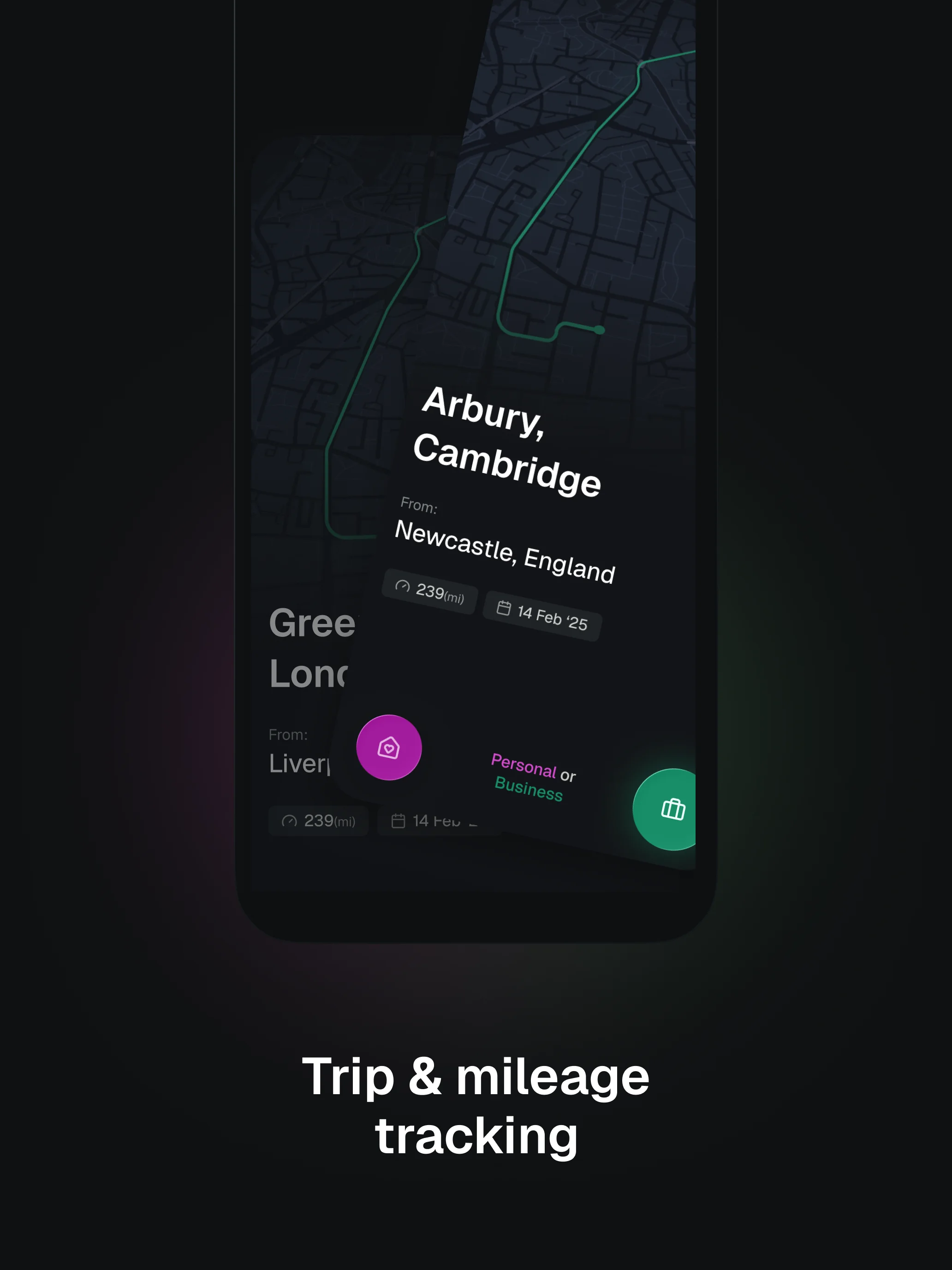
- Mileage - 45p per mile for the first 10,000 miles, 25p after. Driving between sites, to suppliers, to the merchant. Track every trip. Most CIS workers are driving thousands of miles a year and claiming a fraction of what they could.
- Tools and equipment - Drills, PPE, hand tools, power tools. All claimable.
- Materials - If you supply your own materials on a job.
- Work clothing and PPE - Steel-toe boots, hi-vis, hard hats.
- Vehicle costs - If you're not using the mileage rate, you can claim actual costs (fuel, insurance, repairs) proportional to business use.
- Phone - Business calls and data. Track the split between personal and business use.
- Training and certifications - CSCS card renewals, site safety courses, any professional development.

If you're not claiming all of these already, MTD might actually save you money by forcing you to track properly.
Picking the Right Software
Here's what to look for as a CIS subcontractor:
Does it handle CIS deductions? Not all accounting software understands CIS. You need something that lets you record gross income AND the deduction separately, so your tax position is calculated correctly.
Does it do MTD submissions? It needs to connect directly to HMRC and send your quarterly updates. Check it's on HMRC's compatible software list.
Is it easy enough to use on site? If you need to sit at a desk for an hour to log your expenses, you won't do it. You need something you can use from your phone - snap a receipt at the petrol station, log a trip as you park up.
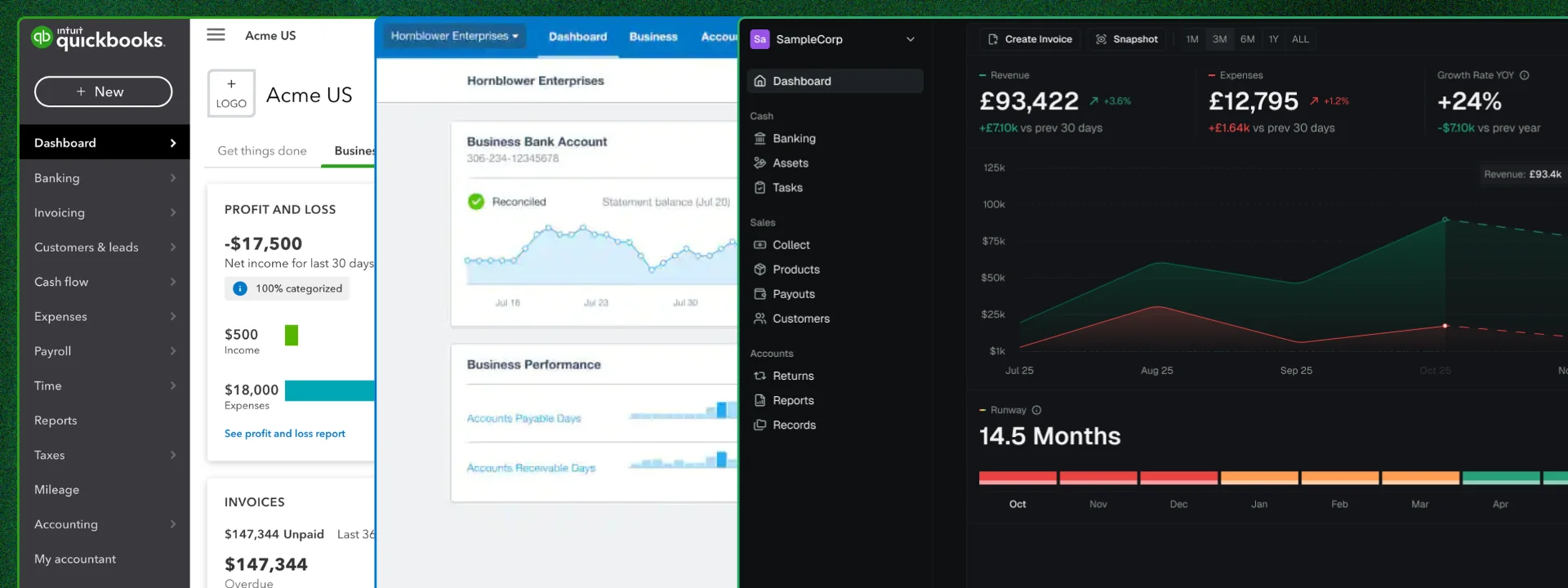
Xero - Handles CIS well. Can calculate deductions and generate CIS statements. Starts at £16/month. More feature-heavy than most subbies need.
Aarvo - Designed for people who aren't accountants. Receipt scanning from your phone, mileage tracking that works like swiping on dating apps (left to dismiss, right to confirm), and CIS deduction tracking built in. Built for the person who wants to spend 2 minutes at the end of the day, not 2 hours at the end of the month.
QuickBooks - Good GPS mileage tracking. From around £10/month for self-employed plan.
The Penalty System
HMRC is introducing a points-based system:
- 1 point per missed quarterly submission
- 4 points = £200 fine
- Late payment: Interest from day 1, then 2% penalty after 15 days, another 2% after 30 days
Good news: HMRC has confirmed a grace period for 2026/27. No penalty points for late quarterly updates in the first year. But don't use that as an excuse to wait - getting set up now means you're not scrambling in April.
FAQ
Does my CIS deduction count as tax paid?
Yes. Nothing changes here. CIS deductions are still offset against your income tax liability. If you've overpaid (which many subbies do), you'll still get a refund through your final declaration.
I work for one contractor - is this simpler for me?
A bit. One income source means one set of records. But you still need to track all your expenses digitally and submit quarterly.
My contractor gives me a monthly statement. Can I just use those?
The statements help, but they only show your gross pay and deductions. You still need to record your expenses separately. Your software combines both to give HMRC the full picture.
I earn under £50,000 gross - do I need to worry?
Not yet. But the threshold drops to £30,000 in April 2027 and £20,000 in April 2028. If you're close, start now.
Can I claim for tools I bought before April 2026?
Capital allowances for tools and equipment purchased in previous years are handled in your final declaration, same as before. MTD doesn't change what you can claim - just how you report it.
Get Ahead of It
Look - nobody became a subcontractor because they love admin. But MTD is happening whether you like it or not, and the subbies who get set up early are the ones who'll actually benefit from it. Better expense tracking means more legitimate claims. More claims means less tax.
If you want something that takes the pain out of this, take a look at Aarvo. It's built for people who'd rather be on site than staring at a spreadsheet - and it helps you claim every mile and receipt you're owed, so it more than covers its cost.
Related reading: Not just CIS? Check out our guide on what MTD means for sole traders or what MTD means for landlords. See how Aarvo handles expense tracking and MTD submissions in documentation, or check out pricing.
This guide references official HMRC guidance on MTD for ITSA and CIS scheme rules. Accurate as of March 2026.

Aarvo Team
Product updates and insights
Related articles
View all news →
What Does Making Tax Digital Mean for Landlords?
Making Tax Digital for landlords starts April 2026 if your property income tops £50,000. Quarterly reporting, what expenses to track, and software options.
Aarvo · 30 Mar 2026

What Does Making Tax Digital Mean for Sole Traders?
Making Tax Digital for sole traders starts April 2026 if you earn over £50,000. What's changing, what you need to do, and how to pick the right software.
Aarvo · 23 Mar 2026

The Edge You Never Knew You Needed
10 years of building businesses without understanding my own numbers. That frustration became Aarvo. Here's the story from our founder.
Aarvo · 12 Nov 2025